
Love the Centre Stone? Look at the Rest of the Ring
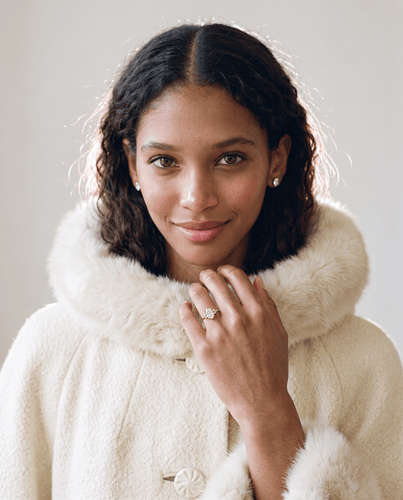
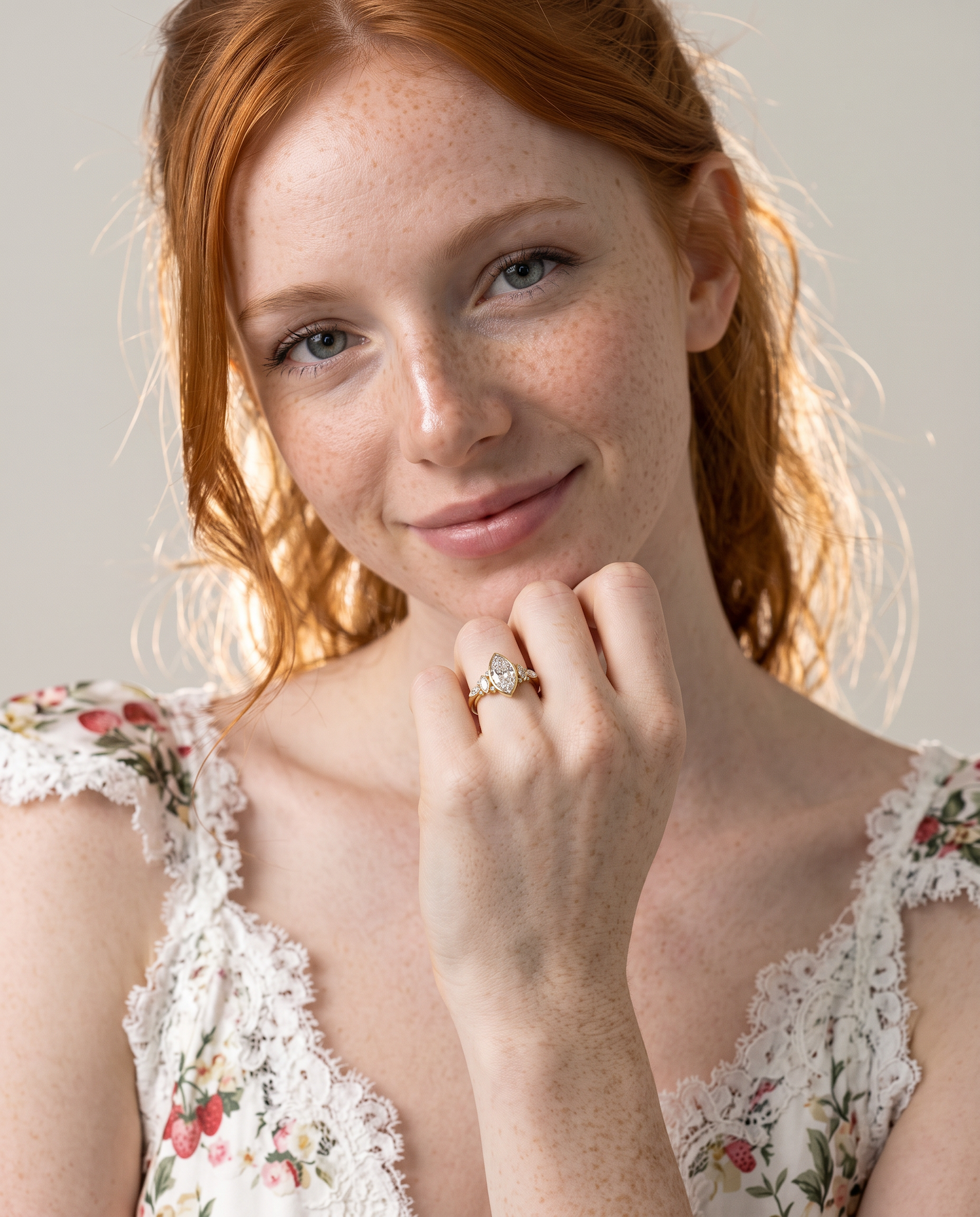
You save one engagement ring because you love the oval stone. The next has almost the same centre, yet somehow it feels much more like you. Before putting that difference down to the centre stone, look at what surrounds it.
A fine line of diamonds along the band creates a different effect from a bright border around the centre. Two distinct side stones change the outline again. Working out which detail caught your eye can save a lot of aimless scrolling.
Find where your eye goes
The terms shoulder-set, halo, trilogy and triple pavé describe different parts of a ring, and their features can overlap. A halo can sit above diamond-set shoulders, for example. Separate the decoration along the band from the arrangement of the principal stones as you browse.
Start with the band. Lily Arkwright’s collection of rings with diamond-set shoulder details shows accents beside the centre setting, along the sections called the shoulders. Notice whether you like a fine line of stones or a more open, decorative pattern, with metal showing between them.
For a border around the centre itself, compare halo settings and proportions within the halo collection. A narrow frame follows the stone closely; a broader one makes more of the surrounding decoration. Look at the complete outline, including the border, rather than the centre alone.
Keep one part of the comparison steady
Keep the centre’s approximate length and width, the metal colour and the photographic angle as similar as possible when comparing settings. Two ovals can have quite different proportions, even at the same weight. Matching the shape name alone leaves plenty of room for other differences to influence your choice.
For example, start with an oval on a plain band, then a similarly sized oval on diamond-set shoulders. Finally, try a comparable oval with a halo. The first change adds detail along the band; the second creates a frame around the centre. That sequence helps you identify where you enjoy the extra decoration.
Keep your spending limit in mind while doing this. Ask for complete-ring quotes for the versions you are considering, rather than comparing starting prices attached to different specifications. If an extra detail takes the ring beyond your budget, you can decide whether that feature matters more than another choice.
Read the stone descriptions separately from the style names. A trilogy or halo tells you about an arrangement, not whether the centre is a natural diamond, a lab-grown diamond or another gemstone. Check the smaller stones too; their material and origin need not be the same as the centre’s.
GIA’s explanation of carat weight makes another useful distinction: the centre diamond’s weight and the combined weight of all the diamonds are different measurements. As a hypothetical example, two rings could each contain 1.50ct of diamonds overall, while one has a 1.00ct centre and the other a 0.75ct centre.
Those totals leave different amounts of diamond weight in the accents. To judge the visible size, use the centre’s length and width in millimetres alongside the finished setting’s dimensions. Neither the centre weight nor the total diamond weight describes the complete outline.
Notice the spaces as well as the stones
A close-up can help you see how a row of small diamonds meets the centre setting. Is there a strip of visible metal between them? Do the accents stop quite near the top of the finger, or continue further around the band? Those details can explain why two rings with similar descriptions look different.
A trilogy has three principal stones. In Lily Arkwright’s three-stone ring designs, the two side stones can echo the centre’s shape or contrast with it. Look at the gaps and the change in scale from the centre to the sides. You might like three clearly separate shapes, or prefer the stones to form a closer group. In a halo, notice whether the border echoes the centre’s outline or creates a more decorative shape of its own.
Then look at an ordinary on-hand view. The close-up shows the small setting details; the wider photograph shows how much of that detail you will notice while wearing it. A tiny gap that fills your screen may be barely noticeable on the hand.
Bring your usual jewellery into the decision
Try your shortlisted rings with familiar jewellery to assess how much decoration you enjoy seeing together. A patterned bracelet may draw your attention towards a simpler band, or make you appreciate the fuller combination. For broader styling ideas, the guide to matching an engagement ring with everyday fashion picks up where this design comparison leaves off.
Try the wedding band before you settle
A wedding band adds another line beside the engagement ring. Put a plain band and a diamond-set one next to your shortlist, if those are options you would consider. Look at how the extra row changes the balance, especially when the engagement ring already has diamonds along its shoulders.
Turn the ring slightly when looking at triple pavé band details. The three rows of closely set accent stones may follow the top and sides of the shoulders, so an overhead view can miss part of the decoration. Triple pavé describes these small-stone rows, rather than three principal stones.
With those side rows in view, check where the wedding band would sit. Ask the jeweller to assess the pairing, including clearance and possible contact between the settings. A pleasing view from above does not establish that two rings are suitable to wear together.
Ask about care and future resizing while you have the rings in front of you. GIA’s setting guide notes that pavé stones may need occasional maintenance and that resizing can disturb them. Get advice for the actual design, rather than assuming every decorated band has the same limitations.
Before leaving, describe your favourite without using “more sparkle”. Perhaps you like the narrow frame around the oval, or the way two side stones create a wider outline. That is a useful preference to take into your next comparison. It gives you something more specific to look for than another beautiful ring to save.