
Expressive Aging: How Resilient Hyaluronic Acid Formulations Adapt to Dynamic Facial Movement
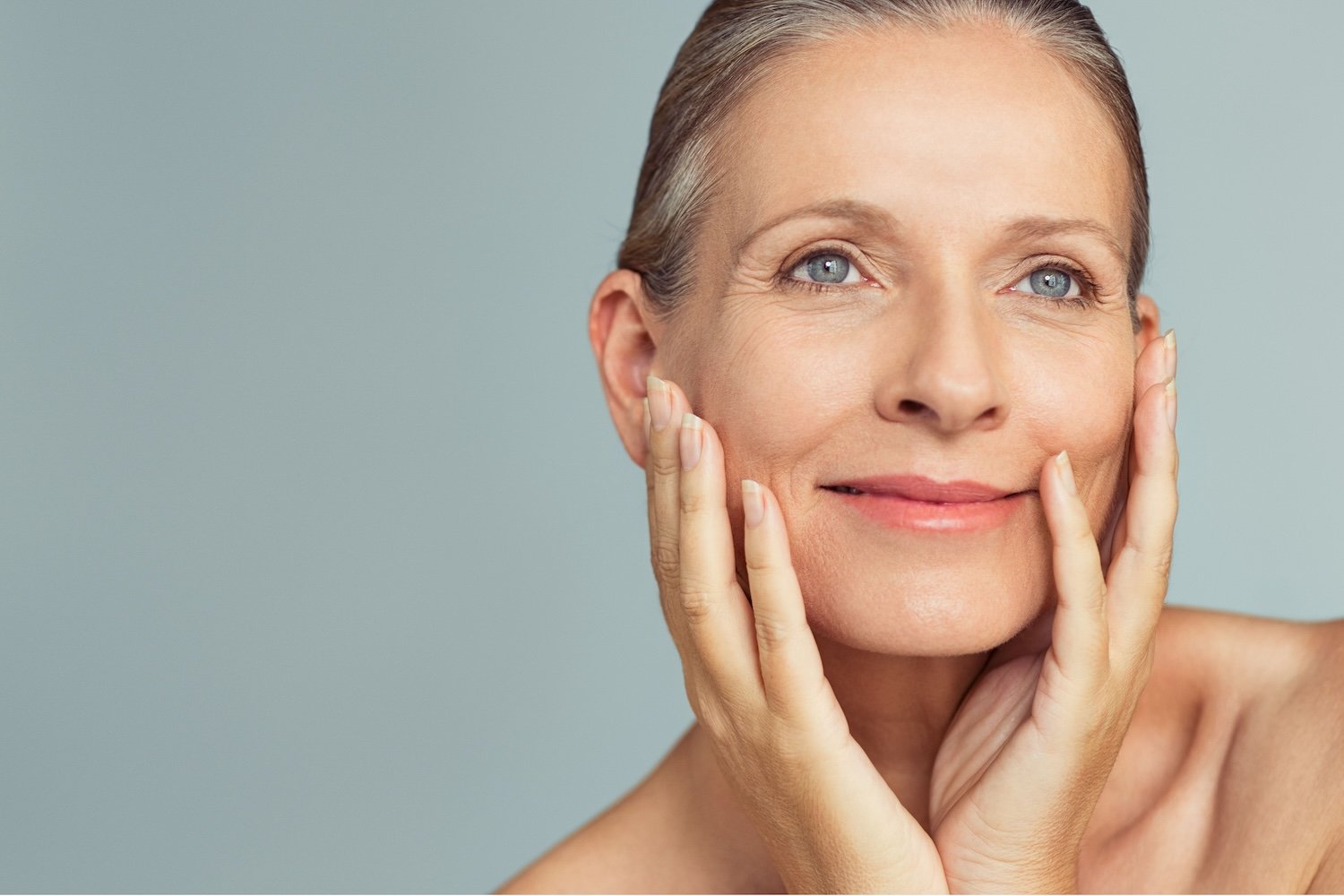
Skin folds when muscles contract. Facial expression and aging go hand in hand; a face moves constantly to communicate emotion. Early aesthetic treatments largely ignored this mechanical reality. We placed static, rigid materials under the skin to correct volume loss. The face looked smooth at rest but appeared stiff during facial animation. We now recognize that correcting a fold requires the injected material to actually stretch and compress with the tissue. Dynamic facial movement creates a harsh mechanical environment for any implant. A filler placed in highly mobile areas is subjected to thousands of compression and stretch cycles every day. If the implant cannot tolerate these forces, it will either restrict the muscle or break down rapidly.
Formulating for Continuous Motion
Resilient HA gels were developed specifically to survive this constant mechanical stress. A primary example of this technology is the Teosyal collection. Teosyal is a line of hyaluronic acid fillers manufactured using a specific cross-linking process designed to preserve the natural long chains of the hyaluronic acid molecule. This preserved network allows the gel to behave like a shock absorber rather than a rigid space filler.
As a clinician preparing to buy Teosyal online for your aesthetic practice, you must factor in the specific rheological properties of the formula you select to treat highly mobile areas without restricting natural motion. Teosyal gels stretch under pressure and bounce back to their original shape once the muscle relaxes. The entire Teosyal range offers varying degrees of stretch and support tailored to different tissue depths.
The face is unique in its anatomical structure. Muscles of facial expression insert directly into the skin rather than attaching bone to bone. Contraction pulls the skin directly. We call these highly active regions mimetic muscle zones. Areas like the perioral and nasolabial areas experience massive biomechanical forces. A rigid gel acts like a speed bump under the skin; it resists the natural glide of the tissue layers. When a patient smiles, a stiff implant might become visible or create an unnatural bulge. We need soft, flexible gels that can dissipate these mechanical forces efficiently.
Biological Shear Stress and Gel Disruption
Engineers define shear stress as a force that causes layers of a material to slide past each other in opposite directions. The human face operates as a prime example of biological shear stress. The superficial musculoaponeurotic system acts as the primary transmission network for facial expressions. It connects the deeper facial muscles to the superficial skin. Contraction of a muscle pulls this system, which in turn pulls the dermis. Any hyaluronic acid implant resting between these layers experiences immense friction.
A 2019 clinical review on facial biomechanics published in Dermatologic Surgery demonstrated that traditional, heavily cross-linked hyaluronic acid fillers fracture or displace when subjected to high lateral stretch. The material simply cannot keep up with the tissue. The gel tears under the pressure of shear stress. The fractured pieces migrate, leading to aesthetic complications like lumps or asymmetry. Advanced formulations avoid this rigid structure entirely.
We evaluate dermal fillers through rheology, which is the study of how materials flow and deform. Manufacturers measure these properties in laboratories using rheometers, applying shear and compression forces to simulate human facial movements. Two distinct properties matter most for natural movement after filler: elasticity and cohesivity. Elasticity measures the ability to resist deformation. Cohesivity measures the internal adhesive forces holding the gel together.
The Microscopic View of Tissue Integration
Cohesive HA gels stick to themselves and to the surrounding tissue. They do not migrate or break apart under pressure. High cohesivity ensures excellent gel adaptability and tissue integration. The material essentially weaves itself into the collagen matrix of the dermis or subcutaneous fat. This integration is crucial for treating smile lines and expression lines. The gel must move as one cohesive unit with the surrounding fat and muscle. If a gel lacks cohesivity, the constant pulling of the zygomaticus muscles will eventually spread the material away from the intended injection site.
Let us look at what happens at the microscopic level during a smile. The zygomaticus major muscle contracts. The fat pads of the cheek lift upward. The skin folds at the nasolabial junction. Any filler sitting in this junction experiences intense compression. Resilient HA gels absorb this energy through gel deformation and recovery. The polymer chains within the gel stretch out to accommodate the fold. Once the smile drops, the chemical bonds pull the hyaluronic acid network back into its resting configuration. A highly cohesive, resilient gel will survive this cycle repeatedly without breaking down prematurely.
The structural integrity of a filler depends on the cross-linking technology used during its creation. Unmodified hyaluronic acid is a liquid that degrades in the body within days. Chemists add cross-linking agents to bind the HA chains together, turning the liquid into a durable gel. Older manufacturing techniques relied on dense cross-linking to create longevity. The resulting gels were very firm. They provided excellent structural support for areas like the cheekbones or the jawline. However, when these firm gels were placed around the mouth, the aesthetic results were often undesirable. The lips would appear stiff, and the perioral area would lose its natural softness.
Rethinking Cross-Linking and Molecular Sliding
Traditional cross-linking creates a dense mesh. Picture a rigid wire fence. When a muscle pulls against this dense mesh, the mesh resists. If the muscle pulls hard enough, the mesh breaks. Once a dermal filler fractures under the skin, it cannot repair itself. Advanced formulation techniques avoid this rigid fence structure. Formulators create a mobile three-dimensional web. The long chains of hyaluronic acid slide past one another under shear
stress. The chemical bonds act as temporary tethers rather than permanent welds. This specific microscopic behavior translates into visible clinical benefits. A patient can speak animatedly, and the gel web stretches to accommodate the expansion of the oral commissures.
Physicians originally approached the aging face as a simple deflation problem. The logic dictated that losing fat and bone required injecting stiff materials to replace that exact volume. This purely volumetric approach ignored the mechanical degradation of the skin itself. A young face has a highly elastic envelope holding that volume in place. A large quantity of stiff hyaluronic acid injected into a damaged, inelastic skin envelope creates an overfilled appearance. The skin cannot accommodate the sudden expansion.
The aging process changes the actual mechanical properties of our skin. Young tissue contains abundant elastin and collagen, allowing it to withstand the repetitive folding caused by the mimetic muscles. As we age, fibroblast activity decreases. The skin loses its ability to snap back. The constant creasing eventually etches permanent lines into the resting face. When we introduce hyaluronic acid fillers into this fatigued tissue, the filler acts as a structural scaffold. It absorbs the mechanical load that the weakened skin can no longer handle.
The Variables of Clinical Application
Material science only goes so far without precise anatomical knowledge. The clinical outcome depends heavily on injection depth and placement. Deep bone-level injections require stiffer products to mimic bone structure and project tissue forward. These deep placements experience very little shear stress. Conversely, superficial injections in the dermis or superficial fat pads require extreme flexibility. The superficial layers are where the most dramatic shifting occurs during conversation.
A practitioner calculates several primary variables before initiating a procedure:
The thickness of the patient's native tissue covering the target area.
The vector and strength of the underlying muscle pull.
The specific ratio of elasticity to cohesivity of the chosen gel.
A rigid gel placed too superficially results in lumps. A highly flexible gel placed too deep results in poor projection and wasted material. The matching of product rheology to anatomical depth is what creates natural-looking, non-restrictive results.
Aesthetic medicine relies heavily on physics and biomechanics. The clinical focus previously prioritized simply filling lines. Today, practitioners prioritize restoring the mechanical properties of youthful skin. Youthful skin is inherently resilient; it snaps back. We want to replicate that specific physical behavior. The continuous refinement of hyaluronic acid cross-linking techniques provides practitioners with better tools to achieve this. A successful treatment is invisible in motion. The soft tissue should glide, stretch, and fold exactly as it did before the intervention.