
Park Once, Explore More: A California Day Trip Guide With an Ebike
The hardest part of a California day trip is not always the drive there. Sometimes the real friction begins after you arrive.
You may already be near a beach town, historic district, waterfront, downtown area, or park entrance. The destination is right there, but every next move becomes its own little task: navigate again, find another parking spot, circle a block, wait for a space, pay a new fee, or get back in the car just to move a few streets over. The day has barely started, but the small hassles have already taken up more energy than expected.
That is where many day trips start to lose their ease. The place itself may be beautiful. The problem is that the movement inside the destination feels too heavy. A car is useful for getting you there, but it is not always the best tool for exploring once you have arrived.
Park once, then move lighter. That simple shift can change the whole rhythm of a day trip. It is not about adding more stops or overplanning the day. It is about making the place you already reached easier to see.
California Day Trips Often Lose Time After You Arrive
California day trips usually begin with the question of where to go: Half Moon Bay, Sacramento, Santa Barbara, San Diego, Napa-area towns, coastal communities, old town districts, or a park near the water. On a map, the plan may look simple. In real life, the trip often becomes more complicated after the first stop.
Parking at the first location does not mean the second one will be easy. You might want to walk near the water, check out another side of town, stop by an overlook, or reach the edge of a park. Each distance may look short, but driving each one can mean repeating the same cycle: start the car, join traffic, find the right turn, circle for parking, check the signs, and walk back toward the place you actually came to see.
That friction is easy to underestimate. A five-minute distance on the map can stretch when parking, one-way streets, crowds, road work, or limited lots get involved. Before long, the day becomes less about the coast, streets, views, or open space and more about how to get to the next small point.
A better day trip is not always about covering more ground. Sometimes it is about reducing the repeated work after you arrive.
Park Once, Then Make the Area Feel Bigger
"Park once" is a useful mindset for California day trips. Instead of driving from one nearby point to another, choose a reasonable place to leave the car and use lighter movement to open up the surrounding area.
This works in many types of destinations. In a beach town, one parking spot may place you within reach of a coastal path, a pier, a main street, and a viewpoint. In a historic district, several blocks may sit close enough to explore without moving the car. Around a waterfront, a ride can connect the harbor, open lawns, scenic edges, and quieter streets. Near some park areas, the best experience may come from linking the outside roads, overlooks, and access points without restarting the whole driving process.
The benefit is not only saving time. The destination begins to feel bigger. You are no longer limited to the few blocks closest to the parking lot, and you do not have to treat every short distance like a separate drive. Areas that feel disconnected by parking become easier to connect through one smoother route.
It also gives the day more flexibility. After you arrive, you can read the crowd, weather, traffic, and mood before choosing a direction. If one area feels too busy, take another route. If a viewpoint looks close enough, add it. If time runs short, return to the car without making the day feel complicated.
Where an Ebike Works as a Day-Trip Connector
In this kind of trip, an ebike is not a commuter accessory or a reason to pack the schedule tighter. It works best as a connector inside the destination.
It fits the distances that feel a little too far to walk but too annoying to drive. That might mean going from a parking spot to a coastal path, from downtown to a waterfront, from a park entrance to a viewpoint, from a historic district to a nearby neighborhood, or from a busy main road to a quieter edge of town.
Those distances may not seem large, but they can shape the whole day. Walking every section can eat up time. Driving every section can break the rhythm with parking. An ebike sits between the two. It keeps movement light, but it does not make the destination feel slow or boxed in.
More importantly, it gives you more choices once you are there. You do not have to lock every stop into the plan before leaving home. If a road looks scenic, pause. If another direction seems calmer, turn that way. If you want to return to the car, the distance does not feel like a penalty.
That is the real use of an ebike on a California day trip. It does not need to make the day busier. It makes the place you already reached easier to unfold.
Mixed California Surfaces Change the Ride
California destinations rarely offer one perfect surface all day. Around beach towns, old districts, park edges, and waterfront areas, a single outing can move across smooth pavement, older streets, brick sections, damp coastal paths, small slopes, rough patches, and surfaces shaped by tree roots, weather, or heavy foot traffic.
None of those surfaces has to be difficult, but they do change the ride. A short bumpy stretch can make you slow down. Damp coastal pavement asks for steadier handling. Older streets with seams and rough edges can interrupt what should feel like an easy loop.
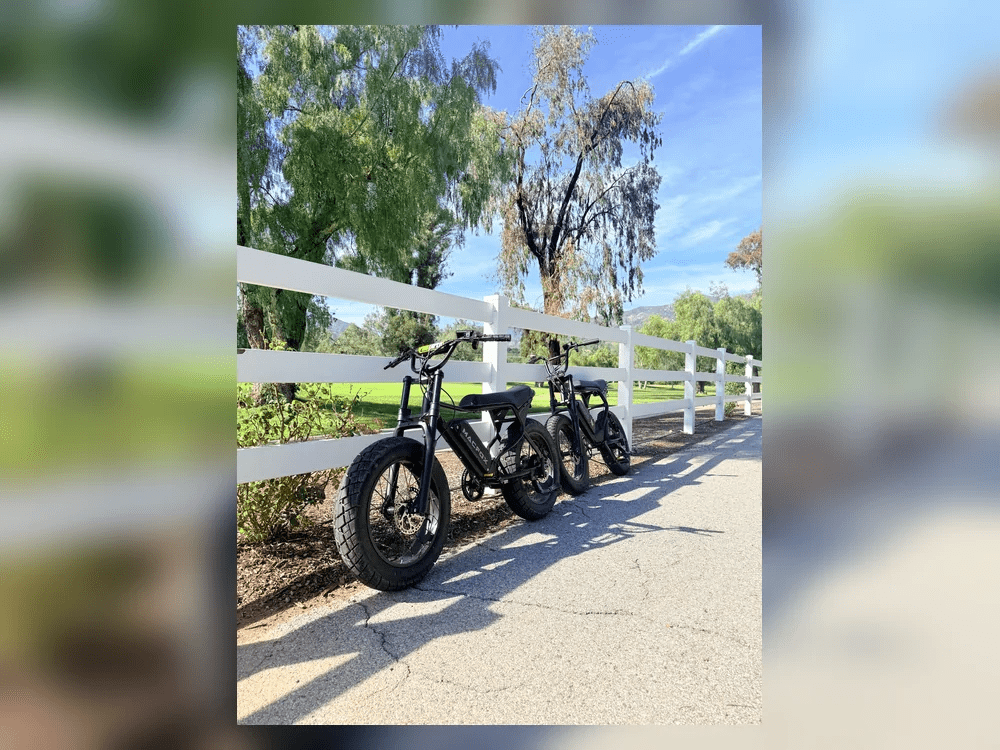
That is where a fat tire ebike can make sense in a practical way. It should not be framed as an off-road machine for exaggerated terrain. Its more relevant day-trip value is comfort and stability on mixed surfaces. Wider tires can make small bumps, older pavement, coastal dampness, and uneven edges feel less disruptive.
For a day trip, that comfort matters. You are not riding one clean route from start to finish. You may be moving between several nearby areas, stopping often, and adjusting to surfaces that change from block to block. If the ride feels tense the whole time, the day loses some of its ease. If the bike feels steady, it is easier to keep exploring without overthinking every surface change.
Know Where Riding Belongs
The key to destination riding is knowing where the bike belongs and where it does not.
California destinations can have very different rules. Some beach paths allow bikes but require slow speeds and clear yielding. Some walking paths are not bike routes. Some park roads may allow riding, while nearby natural areas may restrict electric assistance. A route being close does not automatically mean it is appropriate to ride.
In crowded areas, speed should stay low. Waterfronts, piers, downtown streets, scenic paths, and busy viewpoints often have people stopping suddenly, crossing without warning, or taking photos. If the space gets tight, walking the bike is usually the better choice.
Sidewalks should not become the default plan either. Local rules vary, but pedestrian space should still be treated with care. Riding belongs on permitted roads, bike lanes, shared paths, or clearly allowed areas where the rider is not creating pressure for people on foot.
These details do not make the day less enjoyable. They make it smoother. Clear rules, respectful speed, and legal routes keep the ride from becoming another source of friction inside the destination.
A Better Day Trip Is Not More Stops, But Less Friction
A better California day trip does not always mean adding more stops. Often, it means removing the small points of friction that make a simple day feel harder than it should.
Less circling for parking. Less short-distance driving. Less repeated navigation. Less getting back in the car just to move a few blocks. Once those small barriers fade, the destination itself becomes easier to notice. The coast, streets, sunlight, overlooks, park edges, and quieter corners have more room to matter.
That is the value of the park-once approach. The car gets you to the destination. The ride helps the destination open up after you arrive. They do not need to compete. They simply handle different parts of the day.
An ebike or fat tire ebike is not the main character of the trip. Its role is to reduce the movement friction after arrival. It helps a California day trip stretch beyond the nearest parking lot without turning every short distance into another drive.
When a place becomes easier to connect, the day changes. It is no longer just a destination you reached. It becomes a set of streets, paths, viewpoints, and edges you actually had time to experience.