
Moonstone Engagement Rings: A Buyer's Guide to Quality, Durability, and Care
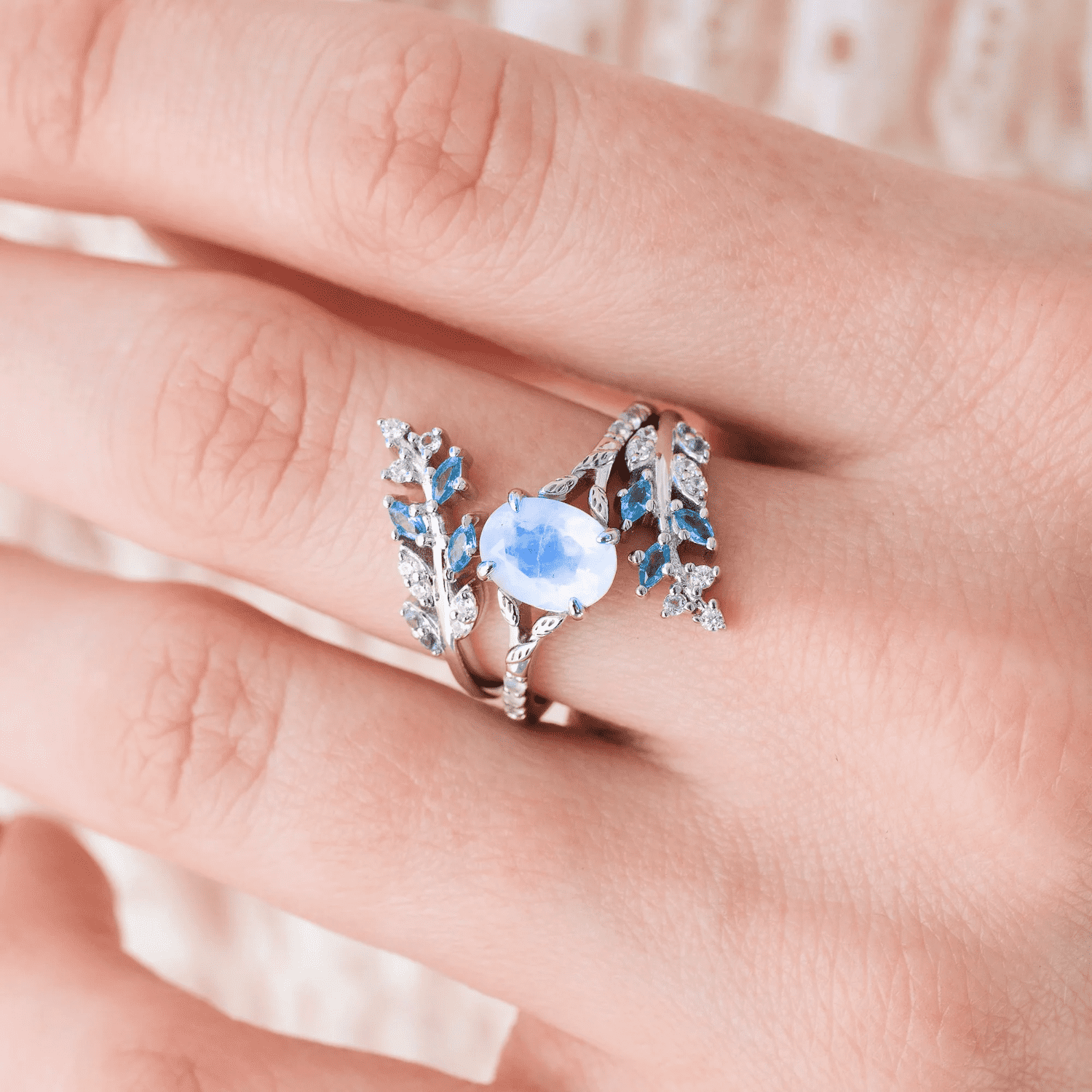
Moonstone has a quality no other gemstone quite replicates: a soft, glowing light that seems to move underneath the surface as the stone tilts. That effect, called adularescence, is the reason moonstone has been used in jewelry for centuries and the reason it keeps showing up again as a non-traditional engagement stone. But that same optical effect is also what makes moonstone trickier to shop for than a diamond or even most other colored gemstones -quality varies enormously, and a lot of what makes a moonstone good or mediocre isn't obvious in a small product photo.
This guide covers what moonstone actually is, how to judge quality, what durability trade-offs come with wearing it daily, and what the term "boho gemstone jewelry" means in practice when you're evaluating pieces.
What Moonstone Actually Is
Moonstone is a variety of feldspar, a mineral group that makes up a large share of the earth's crust, though only a small fraction of feldspar forms with the internal structure needed to produce adolescence. That glow comes from thin, layered structures inside the stone that scatter light as it enters -similar in principle to how a soap bubble produces shifting color, though the visual effect is softer and more diffuse.
There are a few common varieties worth knowing:
Classic white moonstone shows a blue-to-white glow across a translucent, milky-white body.
Rainbow moonstone technically refers to a different feldspar (often labradorite-adjacent) that produces a broader flash of blue, and sometimes hints of other colors, across a clearer body.
Peach and gray moonstone shift the base body color while keeping the same light-scattering effect, and have become more popular in the last several years for their warmer or moodier tone.
None of these varieties is objectively better -the right one depends on what color palette and light effect the wearer is drawn to.
Why Moonstone Quality Is Hard to Judge From a Photo
With a diamond, a certificate tells you almost everything you need to know. With moonstone, the two most important quality factors -the strength of the blue flash and the evenness of the glow across the stone's surface -are directional and shift depending on the angle of the light and the stone. A moonstone that looks flat and cloudy in one photo can look luminous in another, and the reverse is also true.
A few practical things worth checking before buying:
Ask for a video, not just photos, if buying online. Adularescence only reads properly in motion.
Look for an even distribution of the flash across the stone's face, rather than a bright spot in one corner and dullness elsewhere.
Check for visible cracks or fissures, which are more common in moonstone than in harder stones and can affect both appearance and durability.
Compare body color in natural light and indoor light, since some moonstone shifts noticeably between the two.
Durability and Setting Considerations
Moonstone sits at 6 to 6.5 on the Mohs hardness scale, meaningfully softer than sapphire, aquamarine, or diamond. It's also more prone to chipping along natural cleavage planes inside the stone, which is a structural weakness rather than a surface issue.
This doesn't mean moonstone can't be worn as an everyday engagement ring, but it does mean the setting matters more than it would for a harder stone:
Bezel settings are the most protective option, fully or partially encircling the stone's edge and reducing the risk of a chip from an accidental knock.
Low-profile settings, which sit the stone closer to the finger rather than raised up, reduce how often the stone catches on things during normal daily activity.
Prong settings are still workable but benefit from wider or flatter prongs rather than thin, pointed ones, since moonstone is softer and can wear down or chip against sharp prong edges over time.
Anyone considering a moonstone engagement ring for regular daily wear -rather than occasional wear -should weigh these setting details fairly heavily, since they affect how well the stone holds up over years rather than just how it looks on day one.
What "Boho Gemstone Jewelry" Actually Refers To
The term gets used broadly, so it helps to define it concretely rather than treat it as a vague style label.
Boho gemstone jewelry generally describes pieces built around a few recurring design principles:
Raw or organically shaped stones, rather than perfectly symmetrical faceted cuts -rough or partially polished stones, asymmetrical cabochons, and freeform shapes are common.
Mixed or textured metalwork, such as hammered bands, wire wrapping, or oxidized finishes, instead of a smooth, high-polish surface.
Layering and stacking, both within a single piece (multiple stones set together) and across pieces (rings, bands, and stacking rings worn in combination).
A wider range of stone choices, including moonstone, labradorite, opal, and other stones valued for their internal optical effects rather than pure clarity or brilliance.
In practice, boho gemstone jewelry tends to prioritize character and individuality in a stone -inclusions, color variation, and irregular shape are often treated as features rather than flaws, which is a different value system than the one used for grading diamonds.
Questions Worth Asking Before You Buy
Is the moonstone natural, and has it been treated in any way? Some moonstone is coated or treated to enhance color; this should be disclosed.
What's the setting style, and does it protect the stone's edge? Given moonstone's softness, this matters more than it would for a harder gemstone.
Can the piece be resized without damaging the stone? Resizing a ring with a bezel-set or low-profile stone can be more involved than resizing a plain diamond band, so it's worth asking in advance.
What's the repair or replacement policy if the stone chips? Since moonstone is more vulnerable to chipping than harder stones, understanding the after-sale policy is worth doing upfront rather than after an issue comes up.
Caring for a Moonstone Ring
Remove the ring before activities involving impact or abrasion -sports, heavy manual work, or anything involving hard surfaces -since moonstone chips more easily than harder gemstones.
Clean with lukewarm water and a soft cloth; avoid ultrasonic cleaners and steam cleaning, both of which can stress internal fractures.
Store separately from other jewelry, ideally in a soft pouch, since moonstone can be scratched by harder stones or metal edges if pieces are tossed together in a drawer or box.
Avoid extended exposure to household chemicals, including some cleaning products and perfumes, which can dull the surface polish over time.
Frequently Asked Questions
Is moonstone durable enough for an engagement ring worn every day?
It can be, but it requires more care than harder stones like sapphire or diamond. A protective setting, such as a bezel, and regular check-ins on the stone's condition make daily wear more realistic.
What causes the glowing effect inside moonstone?
It's called adularescence, caused by thin internal layers of feldspar that scatter light as it passes through the stone, producing a soft, moving glow rather than sparkle or brilliance.
Is rainbow moonstone the same mineral as classic white moonstone?
Not exactly. Rainbow moonstone is often a different feldspar variety, closer to labradorite, that produces a broader, more colorful flash across a clearer body, while classic moonstone has a milkier body with a blue-to-white glow.
Does moonstone need to be treated to look good?
No. High-quality moonstone shows strong adularescence naturally. Some lower-grade material is coated or treated to improve color, which is worth asking about before purchase.
What does "boho" mean in the context of fine jewelry, rather than fashion accessories generally?
In fine jewelry specifically, it usually refers to construction and stone choice -raw or asymmetrical stones, textured or hand-finished metalwork, and layered designs -rather than any particular price point or material quality.