
Is Natural Enough? Understanding Allergen Screening in Personal Care Products

Go to any aisle of the supermarket, and you will find it everywhere: natural, clean, plant-based, gentle. Those are words that make parents of tweens and teens feel better when they go shopping. We assume it must be safe because it is natural.
Not necessarily.
With personal care products, and particularly those targeting a growing body experiencing hormonal transition, natural is often a marketing term, rather than a medical one. And for teens with sensitive skin, eczema, or any unexplained rash, that difference counts.
The Issue With Natural as a Marketing Term
The regulatory use of "natural" in personal care is not strict or universal. Even a product made from plant-based sources may have certain ingredients that cause irritation or allergic reactions. Poison ivy is natural. And so are numerous fragrance compounds that often cause skin irritation.
Teenage skin is sensitive. Puberty alters oil production, sweat composition, and the skin barrier. What worked when your kid was eight years old might now cause acne, irritation, redness, and itchiness.
That is where many families start making the change to look for natural products. While the intention is good, you might not be asking the right question.
You don't want to ask whether the product is natural or not. A better question is whether it has been screened for allergens.
Why Allergen Screening Matters
Allergen screening refers to the comparison of a product's ingredients with published lists of substances that often induce contact dermatitis and skin reactions. Dermatologists frequently use allergen panels to identify which ingredients are most likely to cause issues.
This framework is largely shaped by the American Society of Health-System Pharmacists and the Mayo Clinic. These institutions work to identify common sensitizers like specific preservatives, fragrance ingredients, and chemical additives that frequently appear in allergy tests.
Even a product that claims to be natural may have fragrance blends or botanical extracts that are on these allergen lists. If it is not formally screened, you can't know that it avoids the most frequent triggers.
Parents of active boys (and those just beginning to use deodorant, body wash, or grooming products) are particularly at risk of this danger. And the risk grows with time. Using these products daily can take mild irritation and turn it into a chronic problem.
Puberty Ups The Stakes
Puberty is more than growth spurts and moodiness. It's a biological reset.
That includes:
Increased sweat gland activity
Vitamin secretion in the skin increases
Changes to skin bacteria
The skin barrier may become unstable for a time
The cleaning your son did once or twice a week as a child now becomes daily. Deodorant becomes a staple. There is an increase in body wash for sports. The parent-managed grooming routines are changed to teen-managed grooming routines.
Independence matters. However, parents might need to help teens screen their care products. With poor screening, teens might experience underarm rashes, irritation behind the knees, and redness in areas where they spray fragrances.
Parents tend to take the reaction as indicating that the product is too strong. Sometimes it merely means that it was not well-screened for common allergens.
So What Does a 91 percent Top Allergen Free Rating Mean?
The good news is that there are systems for verifying allergens in products.
SkinSAFE is a database and app created in collaboration with dermatology experts. It compares the products with the best-known contact allergens. Having a product with a high SkinSAFE test score means that it does not contain many of the most common allergen triggers.
For example, Prep U carries SkinSAFE ratings ranging from 91-100% Top Allergen Free, which signals that its formulations are screened against the most frequent allergens recognized in clinical dermatology databases.
That doesn’t mean a product is 100% risk-free. No product can guarantee it will be ideal for everyone. However, it does mean the brand deliberately excludes ingredients most commonly associated with irritation. SkinSAFE ratings range from 91–100%, with formulas that contain fragrance typically falling into the 91% category.
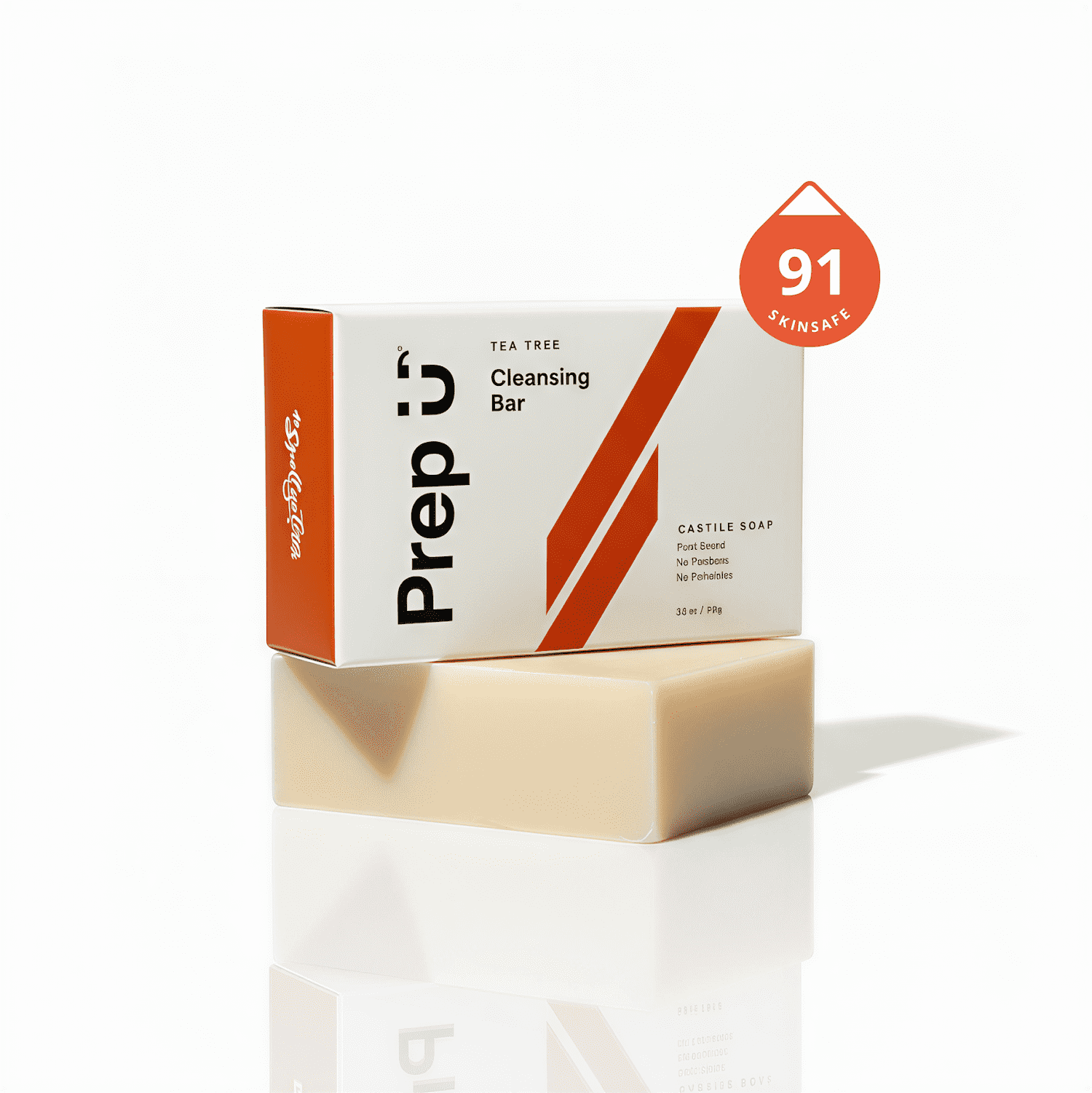
Their product line can be viewed on their official site. Even better, they make their products specifically for boys going through their puberty years, who are mature enough to control their odors, but still growing and developing.
That combination is rare. Natural brands often target babies (too gentle for teenagers) or adults (too aggressive for young skin). The middle ground needs these products just as much.
The Fragrance Trap
Fragrances are among the most common triggers of contact dermatitis. Even those products listed as having natural fragrances or essential oil blends may contain compounds that are irritating to sensitive users.
Teenagers might seek heavily fragrant products to avoid smelling bad when they go to school or out with friends. However, heavier scents tend to have greater risks. Add in applying it every day, and you have significant cumulative exposure.
Good products don't avoid fragrances. Allergen-conscious products will either restrict or selectively choose fragrance ingredients. That minimizes the risk of a reaction.
That difference rarely shows up on packaging.
Parents Need to Be More Critical of Care Products
What can you do if you can't always rely on the packaging? It takes a little awareness.
Rather than looking for buzzwords alone, search for:
Clearly displayed ingredient lists.
Allergen screening listings.
The ratings or verification of a third party.
Strong segmentation of particular age groups.
When a brand addresses puberty by recognizing that sweat and smell change while showing concern for allergens, that's a good bet for a teen.
But the parent still plays a role. You should monitor the skin of your child. If you see irritation or hear them express frustration about a product, it's a sign that something needs to change.
Natural is Not Everything
Perfection is not the aim. You shouldn't be afraid to pick care products for your teen. You just need to make informed choices.
Natural is a good starting point, and it can be part of the decision. However, the term has become increasingly loose in the market. Many brands remove a single ingredient and suddenly label the product as “natural.” That’s why seeing the word “natural” alone isn’t enough without proper allergen screening.
With kids of this age, particularly in the case of active boys developing their independent grooming behaviors and becoming conscious of their bodies, quality products will be of greater importance than fashionable brands.
Finally, it is not the cleaner ingredients that are the purpose. It is comfortable skin, confident children, and habits that help them to become independent in taking care of themselves.