
7 Best Camper Vans for Family Road Trips and Camping Adventures
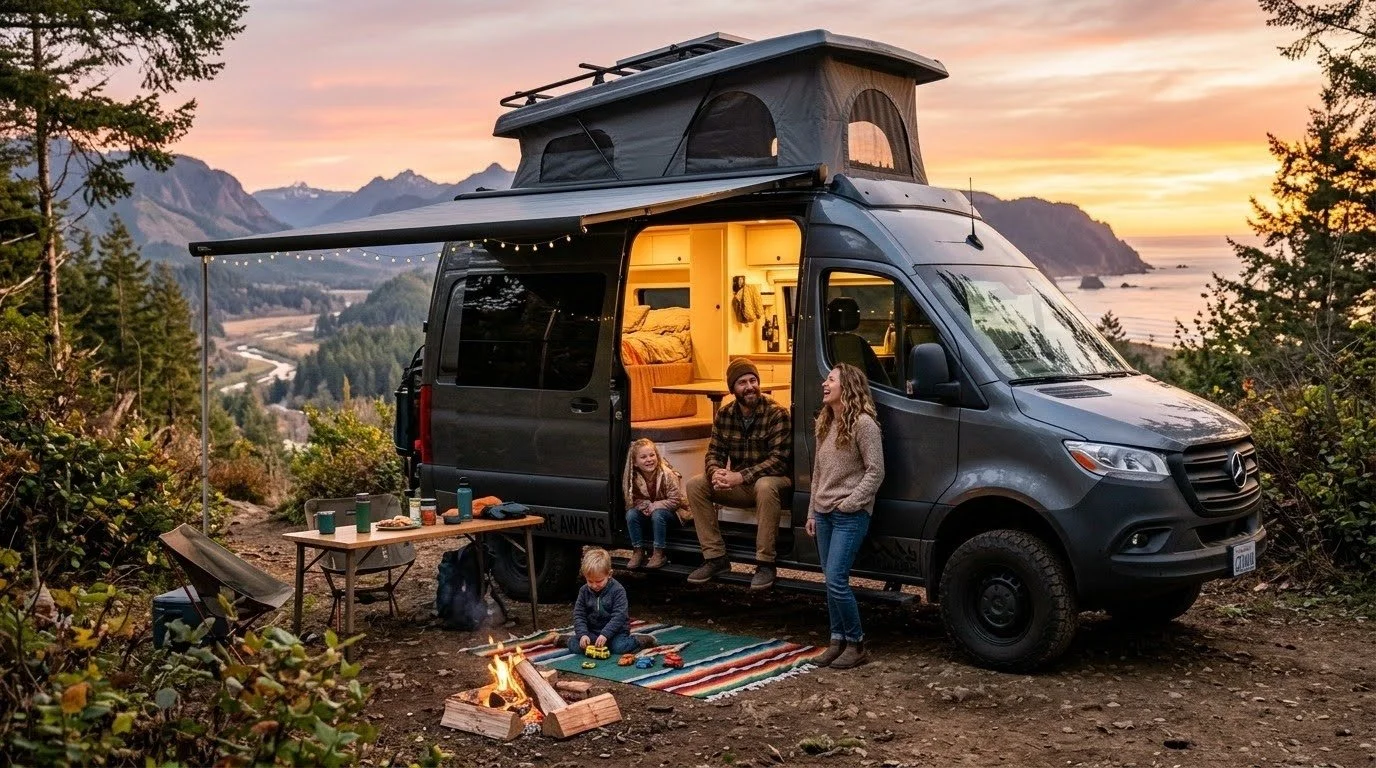
Packing a family of four into a hatchback, then unpacking it all again at a campsite in the dark, quickly becomes tiring. Add a toddler who needs a nap and a preteen who needs Wi-Fi, and the “fun” part of the trip starts to feel far away. A good camper van fixes most of that. Your beds, kitchen, and snacks travel with you, and stopping for the night takes minutes instead of an hour. Here are the best camper vans for families right now and how to pick the one that actually fits yours.
What Makes a Camper Van Family-Friendly?
Families make up a big share of the camping crowd these days, and van builders have noticed. While many popular models still cater to couples, more vans now cater to kids.
Before you fall for a pretty interior, check these five things:
Seatbelts, not just beds. A van that sleeps five but only belts four can’t legally carry your whole crew.
Car seat compatibility. Ask whether the rear seats are crash-tested and have the anchors your car seats need.
A real place for little ones to sleep. Pop-tops, bunks, and convertible benches all work, but at different ages.
A bathroom. Even a small cassette toilet saves you from 2 a.m. walks to the campground restroom.
Size you can live with. A longer van gives you more room inside but limits where you can park and camp.
1. Custom Mercedes Sprinter Builds
A custom AWD Sprinter is the most flexible option on this list, and that matters when your family has specific needs. You choose the number of belted seats, where the beds go, and how much battery power you carry for running the AC while the kids nap.
Seating is where families should start. Kids need rear seats that can safely hold a proper car seat, which means crash-tested seating with the right anchor points, not just a bench with lap belts. Builders like Brooklyn Campervans design their AWD Sprinter conversions around exactly that kind of question, with layouts such as a pop-top van that seats four and sleeps five, or a second row of legal bench seats that converts into a dinette and bed.
These two layouts offer different ways to balance family seating with everyday comfort. The Mothership 170WB has a full bathroom, galley kitchen, and front lounge that can be swapped for road-legal bench seating to carry four, while the more compact Desert Scout on the 144-inch wheelbase pairs a queen bed with a futon and can still be customized after it’s claimed.
What families like about this route:
AWD for real adventures. Snowy mountain passes, dirt roads to lake campsites, and sandy beach access are much less stressful.
Big off-grid power. Large lithium battery banks and roof solar can run air conditioning without the engine on.
Room to grow. A 170-inch wheelbase gives you space for a family lounge, a bathroom, and gear storage for bikes and boogie boards.
The tradeoff is price. A professionally built Sprinter is a serious investment, though financing is common and Sprinters tend to hold their value well on the resale market.
2. Storyteller Overland CREW MODE
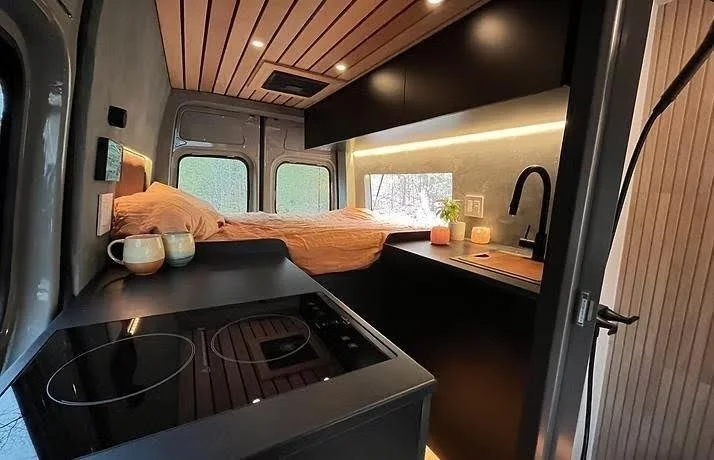
Most camper vans top out at four seatbelts, which leaves families of five stuck. The CREW MODE from Storyteller Overland is one of the few production vans built specifically to fix that. It gives larger families another option for traveling together.
It rides on an AWD 170-inch Sprinter 3500 with dual rear wheels, and it has five shoulder-harness seatbelts. The company says its seating was designed to meet seat pull tests for up to five adults or two adults and up to three car seats. That’s important if you have three kids in seats at once.
Sleeping is split between a rear lounge that converts into a queen bed and a powered, hard-sided pop-up roof bed. There’s also a full bathroom with a flushable toilet and shower, which is a game-changer for potty-training ages.
Keep in mind: The CREW MODE launched at roughly $250,000, and at around 23 feet long, it’s on the larger side for tight campgrounds.
3. Winnebago Solis
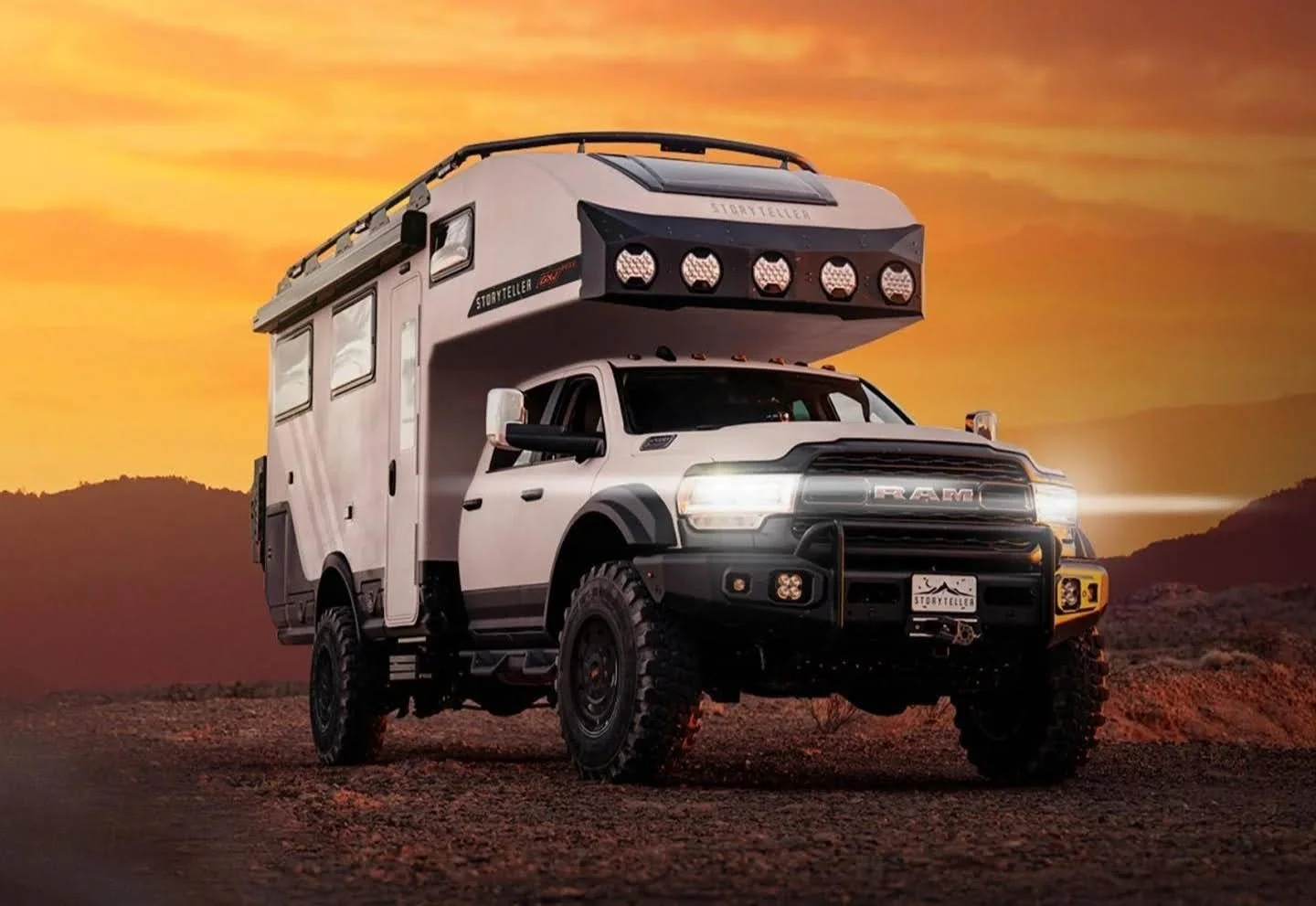
If you want a trusted name, a dealer network, and a layout that just works for a family of four, the Winnebago Solis is a strong pick. It’s built on the Ram ProMaster, sleeps up to four, and Winnebago rates it to carry up to six while driving.
The pop-top is where the kids (or the parents) sleep, and the rear has either a Murphy-style bed or an optional sofa/bed. The dinette uses automotive-grade seats with three-point seatbelts, and there’s a wet bath with a cassette toilet.
The Solis comes in two lengths. The 59P is just under 20 feet, and the 59PX stretches to 21 feet for extra rear storage. That shorter length is great for coastal weekends with tight parking, like a weekend in Half Moon Bay where you’re hopping between beaches, farm stands, and pumpkin patches. The extra storage in the 59PX can also help when packing bikes, beach gear, or bulky kids’ essentials.
Keep in mind: The ProMaster is front-wheel drive, so it’s better suited to paved roads and maintained campgrounds than rough backroads.
4. Roadtrek Play Slumber
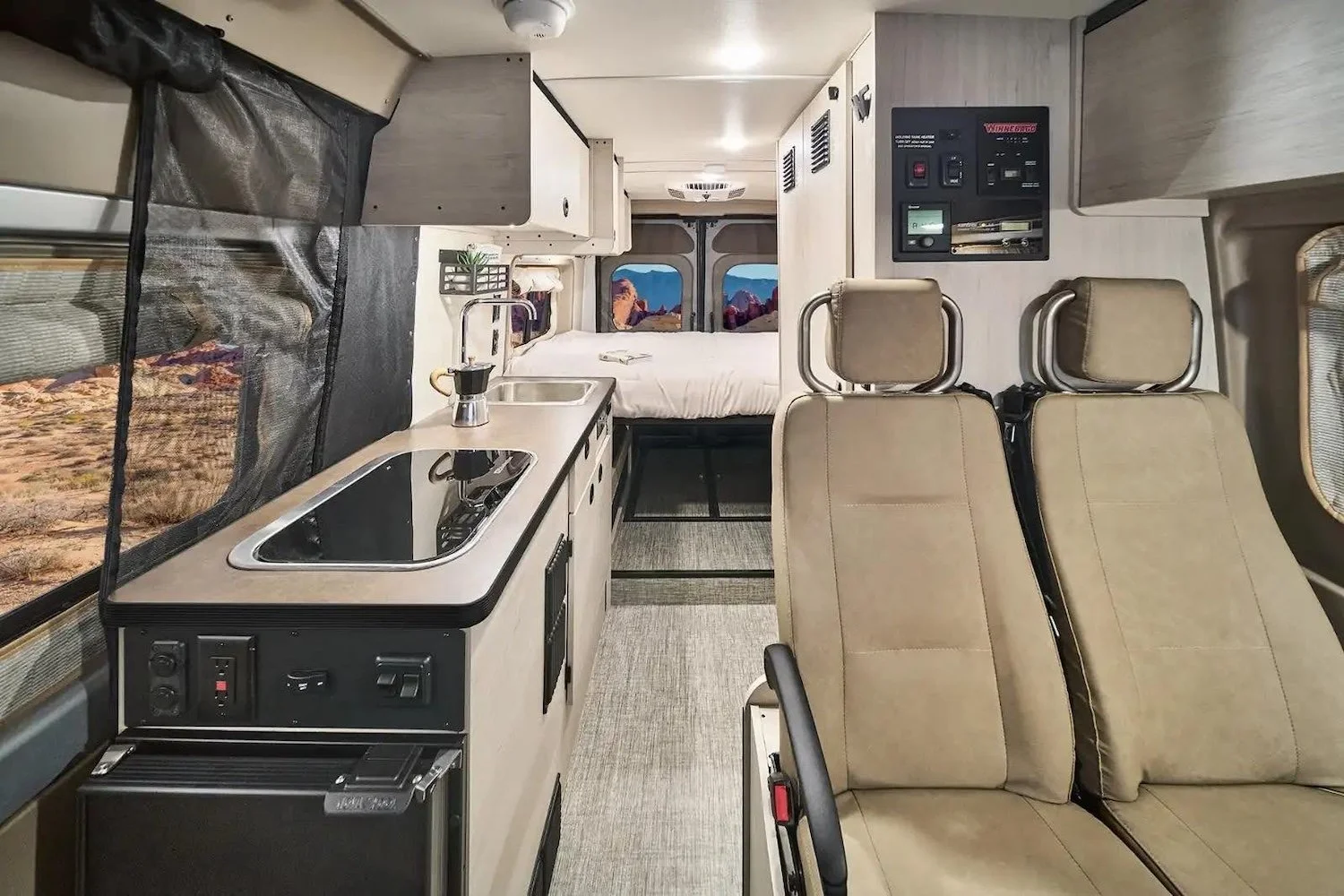
Anyone with two kids knows how often they argue about who gets which side of the bed. The Roadtrek Play Slumber solves it with rear side-facing sofas that convert into two twin beds or one large king bed, plus a pop-top sleeping area up top.
It’s built on the Ram ProMaster 3500 extended chassis and measures just under 21 feet. Inside, you get a galley kitchen with a propane stove and microwave, a wet bath with a toilet and shower, and an open center aisle that’s handy for stashing big items like a stroller or cooler.
This layout works especially well for families with school-age kids. Two twin beds in the back mean everyone gets their own space, and parents can take the pop-top or the twins depending on the night.
Keep in mind: Like other ProMaster vans, it’s best for paved roads and established campgrounds.
5. Thor Tellaro 20J
The Thor Tellaro 20J is an easy entry point if your family has never done van life before. It drives a lot like a big passenger van, fits in most standard parking spaces, and sleeps four with a pop-top bunk above and a bed in the rear.
You get four belted seats, a compact kitchen, and a wet bath. Many units come with a rear bike rack, which makes it simple to bring the kids’ bikes for campground loops.
The Tellaro is a smart choice for testing whether van travel fits your family before spending more. It’s perfect for shorter getaways and works well for the kind of easy day trips from Sacramento that can turn into an overnight when everyone is having too much fun to drive home.
Keep in mind: Check the exact floor plan before you buy, since Tellaro sleeping capacity varies by model.
6. Coachmen Beyond 22D AWD
The Coachmen Beyond 22D AWD takes a different approach. It officially sleeps only two, but it has six seatbelts, which makes it a great pick for families who travel as a group by day and split up at night.
Here’s how that works. Parents sleep inside on the two sofas that convert into a large bed, and older kids sleep in a tent at the campsite. You still get the van’s wet bath, induction cooktop, fridge, and climate control as your home base.
It rides on the Ford Transit AWD with a 3.5L EcoBoost engine, so it handles gravel roads and winter conditions better than front-wheel-drive vans. At about 22 feet, it’s still a manageable size.
Keep in mind: This only works if your kids are old enough (and excited enough) to tent camp.
7. Peace Vans Mercedes Metris
If you want one vehicle for school runs and weekend camping, a Peace Vans pop-top conversion on the Mercedes Metris is worth hunting down. Mercedes stopped selling the Metris in the US after 2023, so you’ll mostly find these on the used market.
At around 17 feet, it fits in regular parking lots and tent sites. The rear bench seats three and folds flat into a bed, and the pop-top adds a second bed for two. Most setups include a small fridge, sink, and stove.
It feels like a modern take on the classic VW camper, and it’s a great size for a family of three or four with young kids.
Keep in mind: There’s no built-in bathroom, and storage is limited, so pack light.
How to Choose the Right Camper Van for Your Family
Count Seatbelts First, Then Beds
This is the most common mistake families make. A van that “sleeps 5” may only belt 4. Every child needs their own belted, forward-facing seat for travel, and car seats need the right anchor setup. Ask the builder or dealer which seats are crash-tested.
Match the Sleeping Setup to Your Kids’ Ages
Babies and toddlers: A lower bed or convertible bench works better than a pop-top, since climbing a ladder isn’t safe yet.
School-age kids: Pop-tops are a favorite. Kids love the “treehouse” feel.
Teens: Separate beds (twins or a pop-top) help everyone sleep better.
Decide How Off-Grid You Want to Go
If you mostly stay at campgrounds with hookups, a smaller battery system is fine. If you want to camp at trailheads or beaches without power, look for larger lithium batteries, more solar, and AWD.
Check Campground Length Limits
Bigger isn’t always better. Many national park campsites have vehicle length limits, and popular sites fill up fast. The National Park Service notes that many park campgrounds require reservations through Recreation.gov, so check site lengths before booking your summer trip.
Rent Before You Buy
Renting the exact model you’re considering for a long weekend is the best test there is. You’ll learn quickly whether the beds work for your kids, whether the bathroom is worth it, and how the van handles on the highway.
Frequently Asked Questions
What is the best camper van for a family of four?
The Winnebago Solis and Roadtrek Play Slumber are popular choices for families of four, as both can sleep four people and have pop-tops. If you want more customization and AWD, a custom Sprinter build gives you the most options. The best pick depends on your budget and how far off-road you plan to go.
What is the best camper van for a family of five?
The Storyteller Overland CREW MODE is one of the few production camper vans with five seatbelts and sleeping space for five. Custom Sprinter builds can also be designed for five. Most standard Class B vans top out at four belted seats.
Can you put a car seat in a camper van?
Yes, but only in seats designed for it. Look for crash-tested rear seats with proper seatbelts and anchor points. Always confirm with the manufacturer or builder before installing a car seat.
Is a pop-top camper van safe for kids?
Pop-tops are generally safe for older kids who can climb a ladder confidently. Many parents keep toddlers in the lower bed instead. Always close the pop-top before driving, since it’s not a place to ride.
How much does a family camper van cost?
New family camper vans range widely. A Winnebago Solis starts around $156,000, while premium AWD Sprinter builds can run $200,000 to $300,000 or more. Used vans, like a Peace Vans Metris, can cost much less.
Do family camper vans have bathrooms?
Many do. Vans like the Solis, Roadtrek Play Slumber, and Storyteller CREW MODE include a wet bath with a toilet and shower. Compact vans like the Metris usually don’t, so you’d rely on campground facilities or a portable toilet.
Is a camper van better than an RV for families?
Camper vans are easier to drive, park, and fit into campgrounds than larger RVs. RVs offer more space and beds, which helps larger families. If you value flexibility and easy driving, a camper van usually wins.
What should I look for in a family camper van layout?
Focus on seatbelt count, bed setup, bathroom, storage, and a table where everyone can eat together. Swivel front seats help create a bigger living area. Storage for bikes and outdoor gear is also a useful feature.
Can you live in a camper van with kids?
Some families do travel full-time in camper vans, but it takes careful planning and a well-designed layout. Larger vans with more seating, storage, and power make long trips much easier. Most families start with weekend trips before trying longer stretches.
Are AWD camper vans worth it for families?
AWD is worth it if you plan to drive on dirt roads, in snow, or to remote campsites. It adds confidence when you’re carrying kids in tricky conditions. If you stick to paved roads, a front-wheel-drive van will be fine.
Final Thoughts
The best camper van for your family isn’t the fanciest one. It’s the one with enough safe seats, beds that fit your kids’ ages, and a size that matches how you like to travel. Start with your seatbelt count, think about where everyone will sleep, and rent before you commit if you can. Get those right, and your van becomes the home base for years of road trips your kids will talk about long after they’ve grown up.